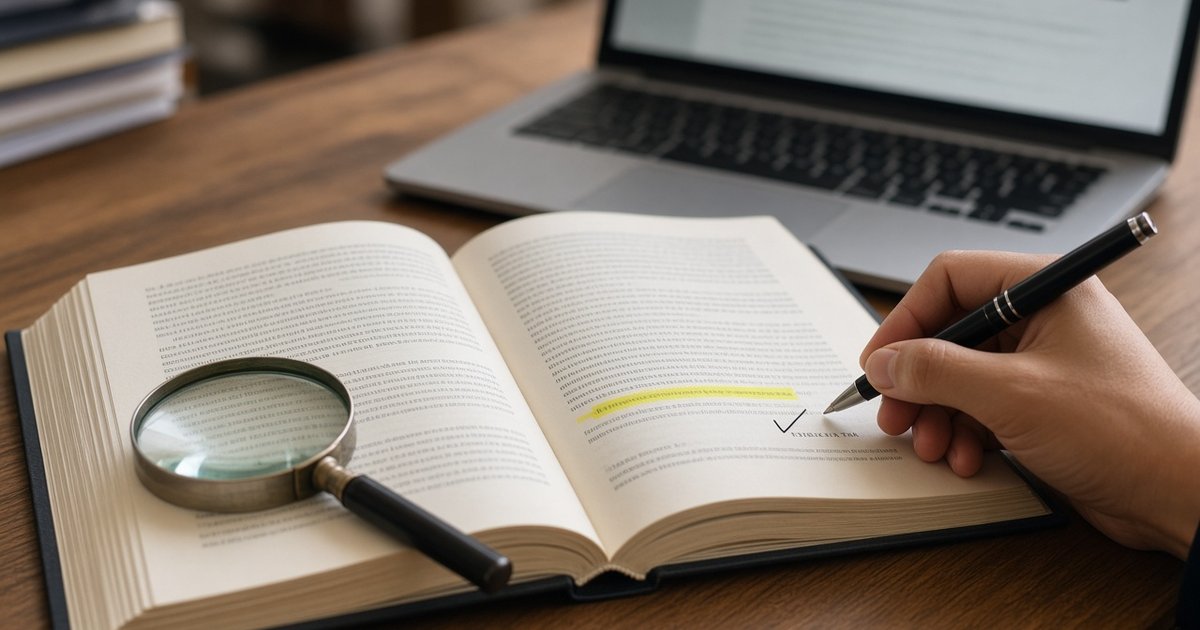
A citation you can't verify is a liability
Ask a general chatbot a Philippine legal question and you'll often get a confident answer complete with case names, G.R. numbers, and quoted provisions. The format looks exactly right. The language sounds authoritative. The problem is that the citation may point to nothing at all.
This isn't a hypothetical risk. Courts around the world have sanctioned lawyers for filing briefs built on AI-generated cases that never existed. In the Philippines, where citing fabricated authority can expose a lawyer to disciplinary liability, the question isn't whether your AI tool says it cites sources — it's whether you can actually open those sources, read them, and confirm they say what the AI claimed.
An answer with citations is only as trustworthy as your ability to verify it. That verification habit — open the source, read the actual passage, check if it's still good law — is what separates careful legal research from confident guessing.
The standard
Don't ask an AI what the law is. Ask it to show you the law — then verify every word.
A citation is only useful if it takes you to the actual source. If you can't open the case, read the relevant passage, and confirm the holding, the citation might as well not exist.
What makes a citation verifiable
A verifiable citation does three things. First, it points to a real document — a Supreme Court decision with a G.R. number you can look up, a Republic Act with a full text you can read, a provision with a section number you can cite. Second, it gives you enough detail to find the relevant passage without re-reading the entire source. And third, it links you directly to the authoritative text — not to a paraphrase, not to someone else's summary, but to the official decision or statute itself.
That last point is the one most AI legal tools skip. They tell you a case name and a docket number, but they don't connect you to the source. You're left hunting through Google, Lawphil, or the Supreme Court e-Library to confirm the case actually exists — and by then, you're back to manual research.
A better standard is to expect the AI to do that work for you. When BatasDB search returns an answer, each numbered citation identifies a document in the library. For Supreme Court decisions, citations link directly to the case in the SC e-Library — no hunting required.
How to verify an AI citation before you rely on it
Verification is a three-step habit, and it applies to any AI legal tool — ours included. The goal isn't blind trust; it's informed confidence that the authority you're citing is real, relevant, and still valid.
Open the cited source
Click through to the full text. A real citation takes you to the actual decision or provision — not to a summary, not to a citation service, but to the authoritative text.
Read the actual passage
Find the section the AI quoted. Does the source actually say what the answer claimed? Context matters: a holding limited to its facts is not the same as a broad rule.
Confirm the case is still good law
A real case can still be weak authority if it was later distinguished, modified, or overruled. Check subsequent treatment before you rely on it.
This isn't busywork. It's the difference between filing on solid ground and filing on a guess. A citation that survives those three checks is authority you can rely on. A citation that fails any of them is one you should discard before it reaches a pleading.
Red flags that a citation might be fabricated
Not every bad citation is invented — sometimes an AI misreads the holding, over-reaches the facts, or states a rule that was later narrowed. But some patterns are immediate warning signs that the citation may not exist at all.
The G.R. number doesn't open
If the citation points nowhere, it was probably invented. A real Supreme Court case has a decision you can read.
The holding doesn't match the summary
The AI may have stitched together facts from multiple cases, or stated a rule the decision never announced. Always verify against the source.
The provision was amended or repealed
Citing an outdated rule is as dangerous as citing a fake one. The law moves, and the answer needs to reflect what the current law says.
When you spot any of these, stop and verify. Open the source. Read the text. Check the subsequent treatment. If the citation doesn't hold up, it's better to know now than after you've already filed.
Why BatasDB search returns answers with verifiable citations
BatasDB search is built around a simple principle: every claim in an answer should trace back to a source you can open and verify. When you ask a legal question, the system searches a verified library of Philippine legal documents — Supreme Court decisions since 1901, Republic Acts, Rules of Court, presidential issuances, and agency circulars — retrieves the relevant authorities, and writes an answer that cites only what it actually found.
Each citation is numbered. For Supreme Court decisions, the citation links directly to the case in the SC e-Library — click [1] on a Supreme Court decision citation and you open that case in the official SC e-Library. For statutes and other legal documents, the citation identifies the source so you can read the relevant passage yourself and confirm the AI got it right.
If the answer isn't in the library — for example, if you search for a nonexistent G.R. number — BatasDB tells you it can't find the case instead of generating a plausible-sounding result. A known gap is safer than a confident fabrication.
How BatasDB handles citations: Search answers cite only documents retrieved from the library, and say so when nothing matches. Supreme Court decision citations link directly to the case in the SC e-Library, so you can read it and verify the claim yourself.
The verification habit applies to every tool, including this one
This isn't an argument that BatasDB is perfect. It's an argument that verification should be built into the workflow — yours and the tool's. When an AI answer cites a case, the first thing you should do is open that case. When it quotes a provision, read the full text. When it says a holding applies to your facts, check whether the source actually supports that claim.
BatasDB makes that easier: search answers cite only documents retrieved from the library, and say so when nothing matches. Supreme Court decision citations link directly to the SC e-Library. But the responsibility to check still belongs to the researcher. No AI tool — ours or anyone else's — should be trusted without verification. The question is whether the tool makes verification possible, or whether it leaves you hunting down sources on your own.
Trust what you can verify, not what sounds confident
The risk with AI legal research isn't that it sounds uncertain — it's that it sounds certain when it shouldn't. A fabricated citation and a real one read identically. The only way to tell the difference is to open the source and verify it yourself.
That verification habit is what makes AI legal research useful instead of dangerous. Open the cited decision. Read the actual passage. Confirm the case is still good law. If the source holds up, you have authority you can rely on. If it doesn't, you've caught a mistake before it reached a pleading.
BatasDB search is designed to make that verification straightforward: answers cite only documents retrieved from the library, and Supreme Court decision citations link directly to the SC e-Library. If the law isn't in the library, the system says so. That's not a substitute for your judgment — it's infrastructure that makes careful research faster to repeat.
Check if a case is still good law before you cite it
Finding a real case and confirming it exists is only the first step. Before you rely on a Supreme Court decision, you should also check whether later cases followed it, distinguished it, modified the rule, or overruled it. A case can be real and still be weak authority if the law has moved past it.
That subsequent-treatment check is what case citators are built for — tracking how later decisions treat earlier ones. BatasDB Case Citator traces how later Supreme Court decisions treated an earlier case, with links to each decision in the SC eLibrary, so you can confirm the authority is still good law before you cite it. Verification doesn't stop at confirming the case exists; it includes confirming the case still carries the weight you're relying on. For background on why this step matters, see What Is a Case Citator, and Why Philippine Legal Research Needs One.
The bottom line: an AI that cites its sources is only useful if you can verify those sources. BatasDB search answers cite only documents retrieved from the library, with Supreme Court decision citations linking directly to the SC e-Library so you can read and verify them yourself.
Related reading
- Before you cite an AI in a pleading — what to check first — why AI legal tools can fabricate cases, what the research actually found, and how to evaluate any legal AI tool before you trust it.
- What Is a Case Citator, and Why Philippine Legal Research Needs One — how to check whether a case is still good law, and why that step matters before you cite authority.
- BatasDB vs Supreme Court E-Library: Which tool is right for you? — an honest comparison of both tools, what each does well, and when to use them together.
Sources
- Supreme Court E-Library, https://elibrary.judiciary.gov.ph/ — the official source for Philippine Supreme Court decisions, Court of Appeals decisions, and other judicial issuances.
- BatasDB — AI-powered Philippine legal research with search answers that cite only documents retrieved from the library, with Supreme Court decision citations linking to the SC e-Library.