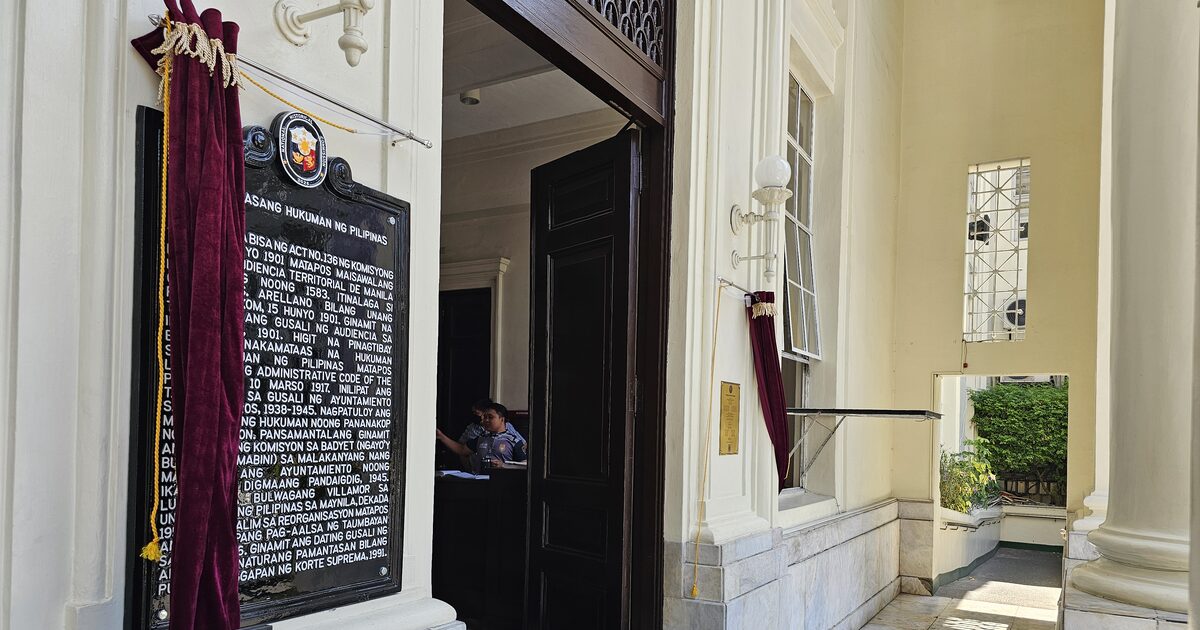
When Philippine lawyers and law students search for legal research tools, they inevitably encounter two names: the Supreme Court E-Library and BatasDB. Both are valuable. Both serve Philippine legal research. But they are not the same tool, and understanding what each does well helps you use them more effectively.
This article is an honest, query-shaped comparison. It will not trash-talk either tool. Instead, it explains what the Supreme Court E-Library is for, what BatasDB adds to the research workflow, and how they fit together in Philippine legal practice.
What is the Supreme Court E-Library?
The Supreme Court E-Library is the official digital repository of the Philippine Judiciary. It was launched in November 2004 as part of the Judicial Reform Support Project, with Justice (later Senior Associate Justice) Antonio T. Carpio as the founding chairperson of the Committee on Computerization and Library.
The E-Library is the primary research tool for the Philippine courts. It puts "all laws, decisions and rules and regulations in the Judge's fingertips," serving justices, judges, court attorneys, and other personnel across the Supreme Court, Court of Appeals, Sandiganbayan, Court of Tax Appeals, and all lower courts.
Its coverage is comprehensive: Supreme Court decisions from 1901 to present, all Philippine statutes (Acts of the Philippine Legislature from 1900, Commonwealth Acts, Presidential Decrees, Batas Pambansa, and Republic Acts), court issuances from 1973 to present, treaties, executive issuances, and as of July 2023, the complete Philippine Reports in three formats (PDF, EPUB, and flip book).
For public access, the Philippine Reports and recent Supreme Court decisions are freely available without registration. Full-text search across the complete library requires registration and is limited to judiciary personnel, certain government officials, law school libraries, and other authorized users.
What is BatasDB?
BatasDB is a Philippine legal research tool built on top of verified public sources, including the Supreme Court E-Library, the Official Gazette, and government agency websites. It is not a replacement for official sources. It is a search engine and verification layer designed to make finding and checking Philippine law faster and more reliable.
BatasDB's library contains Supreme Court decisions from 1901 to today, Court of Tax Appeals and Sandiganbayan decisions, the Constitution, statutes and codes, presidential issuances, and rules from government agencies including the BIR, SEC, Bangko Sentral, DILG, COMELEC, Civil Service Commission, DOLE, and COA.
Unlike traditional legal search, BatasDB accepts plain-English and Filipino queries. You do not need to guess keywords or master Boolean operators. Ask your research question in natural language, and the system returns relevant law, ranked by authority and grounded in actual documents you can open and read.
BatasDB also provides three research features designed to address gaps in traditional legal search: a case citator (free, no account required) that shows whether a Supreme Court case is still good law and how later decisions treated it; AI-generated case digests grounded in the actual opinion; and authority ranking that weighs Supreme Court decisions, statutes, and agency rules based on what Philippine lawyers actually cite.
The core difference
The E-Library is the official repository. BatasDB is a research tool built on top of official sources.
The E-Library serves as the source of record for the courts and the authoritative reference for Philippine legal materials. BatasDB helps you find what you need faster, check whether it is still good law, and search across statutes, decisions, and agency rules in one query — then links you back to the official sources.
Side-by-side comparison
Both tools have strengths. Here is what each does well, without exaggeration or invented limitations.
| Feature | Supreme Court E-Library | BatasDB |
|---|---|---|
| Official status | Official repository of the Philippine Judiciary; authoritative source | Research tool built on official public sources; cites and links to official materials |
| Primary purpose | Official legal repository for the courts; citation verification | Legal research with plain-English search, authority ranking, case citator, and verification workflows |
| Coverage: Supreme Court decisions | 1901–present; includes Philippine Reports | 1901–present; links to E-Library for official citations |
| Coverage: Statutes & codes | Acts (1900–1935), Commonwealth Acts, Presidential Decrees, Batas Pambansa, Republic Acts | Constitution, Republic Acts, Commonwealth Acts, Presidential Decrees, Batas Pambansa, codes |
| Coverage: Agency rules | Court issuances; executive issuances | BIR, SEC, BSP, DILG, COMELEC, CSC, DOLE, COA; Supreme Court and CTA decisions; presidential issuances |
| Search method | Boolean keyword search; exact citation lookup; advanced filters | Plain-English and Filipino queries; hybrid retrieval (keyword + semantic); authority-ranked results |
| Case citator | Citing case list provided; researcher reads each case to determine treatment | Free case citator shows whether a case is still good law: followed, distinguished, modified, overruled |
| Case digests | Not provided | AI-generated case digests grounded in the opinion; never invents facts or holdings |
| Access | Philippine Reports and recent decisions: free public access. Full-text search: registration required (judiciary, government, law schools) | Free case citator (no account). Full search: 7-day free trial; paid subscription after trial |
| Best for | Official citation lookup; verifying authoritative sources; judiciary research | Research questions in plain language; checking if cases are still good law; searching statutes and agency rules together |
When to use the Supreme Court E-Library
Use the E-Library when you need the authoritative source, the official citation, or the Philippine Reports reference. If a pleading, opinion, or memo requires a citation to the official record, the E-Library is where it lives.
The E-Library excels at exact lookups: finding a specific G.R. number, locating the text of a statute by Republic Act number, or pulling up a court issuance by date. It is the fastest tool when you already know what you are looking for and need the official version.
For legal researchers with E-Library access, it also provides Boolean search, wildcard operators, and advanced filtering. If you are comfortable with Boolean syntax and need precise keyword control, the E-Library's full-text search is powerful.
Finally, the E-Library is free for public access (Philippine Reports and recent decisions), which makes it an essential resource for any Philippine legal researcher.
When to use BatasDB
Use BatasDB when your research starts with a question, not a citation. If you need to know "what is the rule on government lawyers representing officials before the Ombudsman" or "what does the Supreme Court say about retroactive application of tax rules," you can ask BatasDB in plain language and get ranked, relevant results.
BatasDB is built for the research questions that do not start with a G.R. number. It searches across Supreme Court decisions, statutes, and agency rules simultaneously, so a query about tax compliance can surface the relevant BIR circular alongside the Supreme Court decision and the statute, all in one search.
The free case citator solves a critical verification problem: before you cite a Supreme Court decision, paste the G.R. number into BatasDB's citator and see whether the case is still good law, or whether a later decision distinguished, modified, or overruled it. The E-Library provides a citing case list, but you still need to read each case manually to determine treatment. BatasDB's citator does that analysis for you.
For government lawyers, in-house counsel, and legal researchers who work with agency rules, BatasDB provides comprehensive coverage of BIR tax issuances, SEC opinions and circulars, Bangko Sentral regulations, DILG circulars, COMELEC resolutions, CSC issuances, DOLE orders, and COA circulars, searchable alongside Supreme Court decisions. That workflow is harder to replicate with the E-Library alone.
BatasDB also flags repealed and superseded provisions, so you do not rely on law that is no longer in force. The system knows when a statute or rule has been amended, repealed, or replaced, and warns you before you cite it.
How they work together
Many Philippine legal researchers use both tools in their workflow, and for good reason. They solve different parts of the research problem.
A typical research workflow might look like this: start with BatasDB to find relevant law with a plain-English query, get authority-ranked results across decisions, statutes, and agency rules, and check the case citator to verify that key cases are still good law. Then, for authorities you plan to cite in a pleading or opinion, verify them in the Supreme Court E-Library as the official source and pull the official Philippine Reports citation if required.
BatasDB cites and links to official sources, including the E-Library, so moving between tools is seamless. The two are complementary, not competing.
Which tool should you choose?
The answer depends on what you are trying to do. If you need the official source, the authoritative citation, or the Philippine Reports reference, use the Supreme Court E-Library. If you need to research a question in plain language, check whether a case is still good law, or search across statutes, decisions, and agency rules in one query, use BatasDB.
Most Philippine legal researchers benefit from using both. The E-Library is the authoritative source. BatasDB is the research layer that helps you find what you need, verify it is still good law, and move faster through the parts of legal research that are tedious and error-prone when done manually.
Both tools respect the same standard: cite real sources, show your work, and never invent law. Neither replaces a lawyer's judgment. The goal is to make careful legal research easier to do right.
Try BatasDB free
Search Philippine legal documents in plain English. Check if cases are still good law. No credit card for the 7-day trial.
Start your free 7-day trial with full access to BatasDB's search, case citator, case digests, and authority-ranked results. Or try the free case citator (no account required) to check any Supreme Court G.R. number right now.
Frequently asked questions
What is the Supreme Court E-Library?
The Supreme Court E-Library is the official digital repository of the Philippine Judiciary. It contains Supreme Court decisions from 1901 to present, all Philippine laws, court issuances, treaties, executive issuances, and the Philippine Reports. It is the primary research tool for judges and the courts, and serves as the authoritative source for Philippine legal materials.
Is the Supreme Court E-Library free to use?
The Philippine Reports and recent Supreme Court decisions are freely accessible to the public without registration. However, full-text search across the complete library requires registration and is limited to judiciary personnel (justices, judges, court attorneys), certain government officials, law school libraries, and authorized users. Non-searchable decisions are available on the main Supreme Court website.
What is BatasDB?
BatasDB is a Philippine legal research tool built on top of verified sources including the Supreme Court E-Library, Official Gazette, and government agency websites. It provides plain-English search, authority-ranked results, case citator for checking if cases are still good law, AI-generated case digests, and coverage of agency rules from BIR, SEC, BSP, and other government bodies.
Can I use both the Supreme Court E-Library and BatasDB together?
Yes, and many researchers do. Use BatasDB for initial research with plain-English queries, authority-ranked results, and to check if a case is still good law with the case citator. Then verify key authorities in the Supreme Court E-Library as the official source. BatasDB cites and links to official sources, making it easy to move between tools.
Does BatasDB replace the Supreme Court E-Library?
No. The Supreme Court E-Library is the official repository and authoritative source. BatasDB is a research tool built on top of official sources. It helps you find relevant law faster with plain-English search and ranked results, check whether cases are still good law, and search across agency rules alongside Supreme Court decisions — but the E-Library remains the official source of record.
Which is better for finding cases on a specific topic?
BatasDB is designed for topic-based research with plain-English queries like 'can government lawyers represent officials before the Ombudsman' and returns authority-ranked results. The E-Library excels at exact citation lookup (finding a specific G.R. number or statute) and Boolean keyword searches. For research questions, BatasDB often finds relevant cases faster; for verifying a known citation, both work well.
Does BatasDB have the Philippine Reports?
BatasDB's library includes Supreme Court decisions, many of which are published in the Philippine Reports. However, the Supreme Court E-Library is the official source for Philippine Reports citations and the complete Philippine Reports volumes. BatasDB links to the E-Library for official citations.
Can I use BatasDB to check if a case is still good law?
Yes. BatasDB includes a free case citator (no account required) that shows whether a Supreme Court case has been followed, distinguished, modified, or overruled by later decisions. This is a critical verification step that traditional keyword search doesn't handle. The E-Library provides citing case lists, but the researcher still needs to read each case manually to determine treatment.