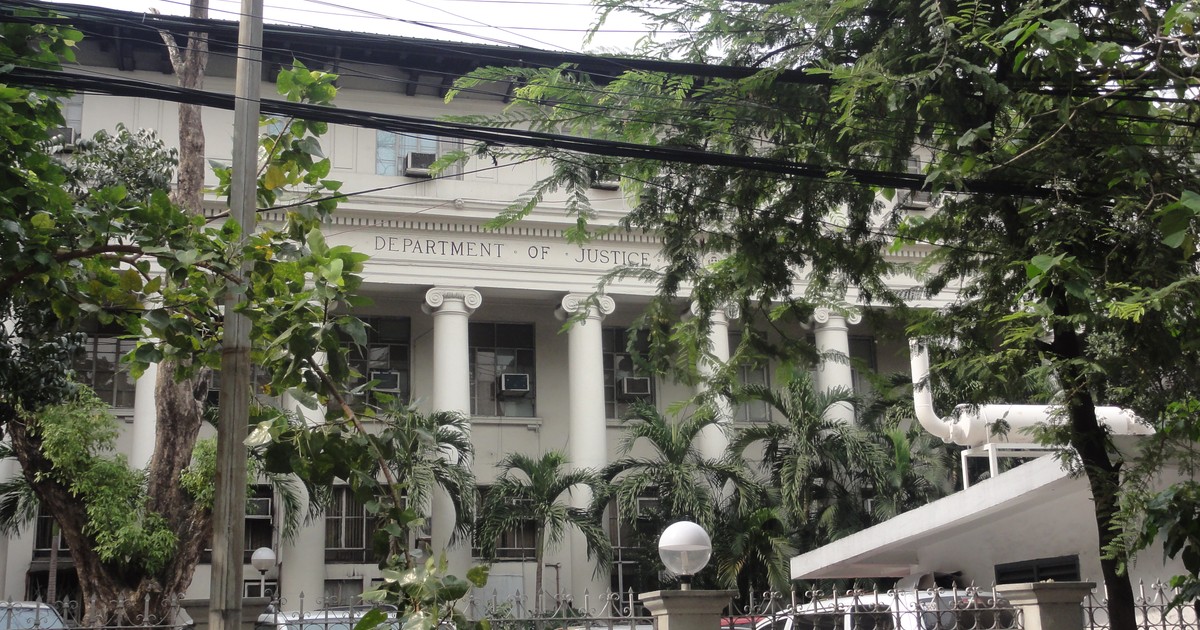
Legal research inside a government office has a different shape from research inside a law firm. The question rarely arrives as "find me a case." It arrives as a memo from the head of office asking whether a proposed step is allowed, a Notice of Disallowance with an appeal period already running, an administrative complaint under the civil service rules, a question from the Bids and Awards Committee, or a draft ordinance the sanggunian wants reviewed before its next session.
The law that answers those questions is spread across more places than the Supreme Court. A statute, its implementing rules, a COA circular, a CSC resolution, a GPPB resolution, an opinion of the Secretary of Justice, and a line of Supreme Court decisions can all bear on one memo. Each lives on a different website, with a different search box, and a different idea of what "current" means.
This guide is for the people who do that work: legal officers in local government units, legal service and legal affairs divisions in departments and bureaus, in-house counsel of government corporations working under the Office of the Government Corporate Counsel, prosecutors and public attorneys, and the legal assistants and researchers who support them. It is written for the Philippine setting in 2026, including the new rules on AI in government that took effect this year.
The shape of the job
Every government legal memo has to answer three questions.
1
What is the rule, and where is its official text?
Not the digest, not the summary site, not the slide from a seminar. The published statute, the filed rule, the promulgated decision.
2
Is it still in force today, as amended?
Laws are amended, implementing rules are replaced, circulars are superseded, and decisions are overruled. The version that was right last year may not be right now.
3
What have the Supreme Court and the agency itself said about it?
A provision means what the Court has read it to mean, and an agency is bound by its own prior rulings until it changes them.
What legal research looks like inside a government office
Section 481 of the Local Government Code describes the job plainly. The legal officer is the chief legal counsel of the local government unit, represents it in civil actions and special proceedings, renders a written opinion on questions of law when the governor, mayor, or sanggunian asks, and drafts the ordinances, contracts, and other instruments the unit signs. Legal divisions in national agencies do the same work under their own charters, and the legal departments of government corporations do it under the Office of the Government Corporate Counsel, which the Administrative Code makes the principal law office of every government-owned or controlled corporation.
Each of those tasks is a research task with a deadline and a reader who will act on the answer. Often there is a second reader later: the auditor who asks for the legal basis of a disbursement, the Ombudsman who asks why an official relied on an opinion, or the court that asks why a pleading cited a rule that had already been replaced.
That changes what "research" means. You are rarely looking for a single authority. You are building a chain: the constitutional or statutory basis, the implementing rules, the agency issuance that applies it, the Supreme Court decisions that read it, and the office's own prior opinions on the point. A missing link in that chain is how a disallowance happens.
The job also has edges that only research reveals. In 2023 the Supreme Court reprimanded a provincial legal officer who had appeared as counsel for the governor in cases filed against the governor before the Office of the Ombudsman. Under Section 481, the legal officer acts for the local government unit itself, so defending an official in a case against that official is a conflict of interest and amounts to unauthorized practice. A legal officer who did not know that ruling would have learned it the hard way.
Step 1: Start from the official text, not a summary
The Supreme Court settled the first rule of Philippine legal research in Tañada v. Tuvera: publication is a condition for a law to take effect, and the law takes effect fifteen days after publication unless it provides a different date. Executive Order No. 200 later allowed that publication to be made in a newspaper of general circulation as well as the Official Gazette. A statute nobody can read is not yet a statute anyone is bound by.
Agency rules have their own version of that rule. Book VII of the Administrative Code of 1987 requires every agency to file three certified copies of every rule it adopts with the University of the Philippines Law Center, and makes the rule effective fifteen days from the date of filing unless a different date is fixed by law or the rule itself. So when a circular is the basis of your memo, the question "is it in force" includes "was it filed," and the Office of the National Administrative Register is where you check.
Where the official text lives: the Official Gazette for statutes and presidential issuances, the Supreme Court website for decisions posted in the last twelve months, the Supreme Court E-Library for older decisions and the Philippine Reports, and each agency's own website for its issuances. Lawphil, maintained by the Arellano Law Foundation, mirrors statutes and decisions and is the working copy most Philippine lawyers reach for first.
Digests, commentaries, and summary sites are for orientation. They tell you which case to open. They are not the case. The auditor and the reviewing court will read the decision, and a digest that compressed the qualifying paragraph out of the holding is a common way to cite a case for something it did not hold.
Step 2: Confirm it is still in force, as amended
The most common research failure in a government memo is not a wrong citation. It is a citation that was right when the rule was issued. Statutes are amended, implementing rules are replaced wholesale, circulars are superseded by a later circular that does not mention the earlier one in its title, and a Supreme Court decision that read the old text is quietly overtaken by the new one. This guide nearly made that mistake itself: the civil service rules on administrative cases that most office templates cite, the 2017 rules, were repealed on 4 August 2025 by the 2025 rules, and the old resolution number is still the one that comes up first.
Three rules of statutory construction do most of the work here. Courts are reluctant to find a repeal by implication, so you are looking for an express repeal or a conflict that cannot be reconciled. Where two laws of contrary tenor both apply, the later expression of legislative will prevails. And an amendment leaves the untouched provisions of the original law in force; if the amendment is later repealed, only the amendment goes.
In practice that means reading the repealing clause of every later law on the same subject, reading the repealing clause of the implementing rules, and, for agency issuances, scanning the agency's later circulars in the same series. It also means recording the date. A memo that says "as of 15 September 2026, no amendment or repeal was found" tells the auditor exactly what was checked and when.
For jurisprudence, finding a case is not the same as verifying it. A decision can be followed in one line of cases, distinguished in another, modified by a later En Banc ruling, and abandoned years later without the original text disappearing from any website. We wrote a plain-English explanation of case citators for this reason, and BatasDB's free case citator does the check for any Supreme Court G.R. number, with no account.
Step 3: Reach the agency layer
This is the part of government legal research that consumes the most time, not because the material is hard but because it is scattered. Each body publishes its own rulings on its own site, with its own search, its own numbering, and in some cases no public search at all. Here is where each source is published and what to watch for.
| Source | Where it is published | What to watch for |
|---|---|---|
| Supreme Court decisions | sc.judiciary.gov.ph for decisions posted in the last 12 months; the Supreme Court E-Library for everything older, now including the Philippine Reports. | Finding the case is not verifying it. Check how later decisions treated it before you cite it. |
| Statutes and presidential issuances | The Official Gazette is the publication of record. Lawphil, run by the Arellano Law Foundation, mirrors statutes from 1900 and decisions from 1910. | Read the repealing clause of every later law on the same subject. Amendments leave the untouched provisions in force. |
| Agency rules generally | The Office of the National Administrative Register at the UP Law Center holds the filed copy. The issuing agency's own website holds the working copy. | A rule takes effect 15 days from filing with the UP Law Center unless a different date is fixed. Filing, not signing, is what counts. |
| COA decisions, circulars, and resolutions | COA's Legal Information Archive at lia.coa.gov.ph, reached from the Issuances menu of coa.gov.ph. An account is required. The COA eLibrary holds manuals and issuances. | Note whether a decision is from a Director or the Commission Proper, and the appeal period that runs from your receipt of it. |
| Civil Service Commission resolutions and circulars | Policy resolutions are posted by year in the Downloads section of csc.gov.ph. | Administrative cases now run under the 2025 Rules on Administrative Cases in the Civil Service, CSC Resolution No. 2500357, in force since 4 August 2025. It repealed the 2017 rules that many office templates still cite, so check which rules you are computing a period under. |
| GPPB resolutions | gppb.gov.ph/resolutions lists every resolution by year from 2003 to 2026, with the approval and posting dates. | Republic Act No. 12009, the New Government Procurement Act, was signed on 20 July 2024 and its implementing rules were published on 10 February 2025. Confirm which regime governs your procurement's timeline before you cite either. |
| Opinions of the Secretary of Justice | The DOJ Library keeps the bound compilations. There is no complete public search; DOJ staff use an in-house database, and other offices may request an opinion through the DOJ website. | Cite by opinion number, series, and year. A later opinion on the same question may have modified the earlier one without saying so in its caption. |
The BIR, DOLE, Bangko Sentral, SEC, DILG, and COMELEC follow the same pattern: the issuing body's website is the official home, the numbering is the citation, and the later issuance in the same series is where supersession hides. Links to each of the sources above are in the list at the end of this article.
Four questions that land on a government legal desk
Four questions arrive more often than any others, and each has a research chain of its own. Each also has a clock that starts before the research does, which is why the chain is worth knowing in advance.
A Notice of Disallowance arrives
The chain
- The appropriation law and the DBM or COA rule the auditor cited as the basis for the disallowance.
- COA circulars on the specific benefit or transaction, and Commission Proper decisions on the same item in the Legal Information Archive.
- Supreme Court decisions reviewing COA. Madera v. Commission on Audit, G.R. No. 244128 (8 September 2020), sets the rules on who returns what: approving and certifying officers who acted in good faith, in the regular performance of their functions, and with the diligence of a good father of a family are not civilly liable to return; those clearly shown to have acted in bad faith, malice, or gross negligence are solidarily liable for the net disallowed amount; and recipients return what they received unless it was genuinely given for services rendered, subject to exceptions the Court may allow for undue prejudice or social justice.
Clock. Under the 2009 Revised Rules of Procedure of the COA, as amended, the Auditor's decision becomes final six months from receipt unless appealed to the Director, and the further appeal to the Commission Proper must be filed within what remains of those six months. A petition to the Supreme Court under Rule 64 is due thirty days from notice of the Commission's decision.
An administrative complaint against an employee
The chain
- The Civil Service Law in Book V of the Administrative Code, and the 2025 Rules on Administrative Cases in the Civil Service, CSC Resolution No. 2500357, which took effect on 4 August 2025 and repealed the 2017 rules.
- CSC resolutions on the same offense, which show how the Commission reads its own rules on penalties.
- Supreme Court decisions on appeals from the CSC, which pass through the Court of Appeals under Rule 43 before they reach the Court.
Clock. Under the 2025 rules, a motion for reconsideration goes to the disciplining authority within fifteen days of receipt, and a decision imposing more than thirty days of suspension or a fine above thirty days of salary is appealable to the Civil Service Commission within fifteen days of receipt. The Commission's own decisions go to the Court of Appeals under Rule 43.
A procurement question from the Bids and Awards Committee
The chain
- Republic Act No. 12009, the New Government Procurement Act, and its implementing rules, after confirming which regime applies to the procurement's timeline.
- GPPB resolutions, and the non-policy matter opinions the GPPB Technical Support Office issues to heads of procuring entities, both posted on gppb.gov.ph.
- COA decisions on disallowed procurements and Supreme Court decisions on procurement disputes, which show what an irregular award costs later.
Watch. An opinion issued under the old procurement law may rest on a provision the new law changed. Check the date of every opinion against the date of your procurement before you rely on it.
A draft ordinance or contract for the sanggunian
The chain
- The provision of the Local Government Code that grants the power being exercised, and the national law the ordinance implements or must not contradict.
- DILG legal opinions, which the Department publishes on its website. DILG Legal Opinion No. 60, series of 2008, for example, holds that the thirty-day review period of the sangguniang panlalawigan runs without interruption.
- Supreme Court decisions on the validity of ordinances and on the limits of local taxing and police power.
Clock. Section 56 gives the sangguniang panlalawigan thirty days from receipt to act on a component city or municipal ordinance, after which it is presumed consistent with law. Section 59 makes an ordinance effective ten days after posting or publication unless it provides otherwise.
None of those chains lives on one website. That is the reason for the table above, and the reason the next step exists.
Step 4: Verify before it leaves your desk
A government legal opinion is relied on by people who are not lawyers. The head of office signs on it, the accountant releases funds on it, the human resource officer imposes a penalty on it, and the Bids and Awards Committee awards a contract on it. None of them will re-check the citation. That makes the last step the one that matters most.
Before the memo goes out: the citation opens to a real document, the quoted text is in that document, the provision is the current version, the case has not been overruled or modified, and the issuance was published or filed. Five checks, a few minutes each, and they are the difference between an opinion that protects the office and one that exposes it.
The rise of general chatbots has made the first check urgent. A fluent answer with a case name and a G.R. number attached is not evidence that the case exists or that it says what the answer claims. We covered why AI tools invent cases and how often in an earlier article. The short version is that a citation you did not open is a citation you have not checked.
Using AI for legal research in government, under the 2026 rules
Two issuances this year drew the lines. On 18 February 2026 the Supreme Court approved A.M. No. 25-11-28-SC, its Governance Framework on the Use of Human-Centered Augmented Intelligence in the Judiciary. It covers judges, court personnel, and lawyers appearing before the courts, and it anchors AI use in human rights, transparency, accountability, and the rule of law. Its premise, which we discussed in an earlier article, is that AI may assist but must not adjudicate.
Then on 9 June 2026 the Department of Information and Communications Technology and the Civil Service Commission issued Joint Memorandum Circular No. 003, series of 2026, a principles-based framework for the ethical and responsible use of AI across the public sector. It applies to all government officials and employees, including those in local government units, government corporations, and state universities and colleges, and it expects agencies to hold their AI vendors to the same standards. Implementing guidelines were due within ninety days.
Add the National Privacy Commission's Advisory No. 2024-04 of 19 December 2024, which applies the Data Privacy Act to AI systems that process personal data, prompts included, and a government lawyer using AI for research has four practical rules to follow.
The lawyer stays accountable
The circular says AI systems shall not displace ultimate human responsibility and accountability. The name on the memo is answerable for every citation in it.
Disclose where AI feeds a deliverable
Deployers are required to provide appropriate disclosure where AI is used in government deliverables or services. Know your office's rule before AI output reaches a signed document.
Keep personal data out of consumer chatbots
The Data Privacy Act applies to AI systems that process personal data, prompts included. A complainant's name, a taxpayer's records, or a personnel file does not belong in a public chatbot.
Prefer tools that show the source
The Supreme Court's own framework puts AI beside the judge, not on the bench. The same standard for research: the tool finds and cites, the lawyer reads and decides.
None of this says "do not use AI." It says use it the way the Court and the circular describe: as an assistant that finds and cites, with a human who reads and decides, and with the same care for personal data that every other system in the office has to meet.
A checklist for the opinion before it reaches the head of office
Whether the memo is yours or a legal assistant drafted it for your signature, it should answer the three questions above before it reaches the head of office. This checklist fits at the top of a legal opinion template, and it doubles as the audit trail if the opinion is questioned later.
- State the question in one sentence, and write down the date the research is current as of.
- Find the constitutional or statutory basis, and open the official text rather than a summary.
- Find the implementing rules and the agency's own issuances, and confirm each was published or filed.
- Search for amendments and repeals. Read the repealing clause of every later law on the same subject.
- Find the Supreme Court decisions on the provision, and check how later cases treated each one.
- Check the office's prior opinions and any DOJ, COA, CSC, GPPB, or DILG ruling on the same point.
- Cite by official number and date, and attach or link the source so the reader can open it.
The habit that separates an opinion that survives audit from a reading list is the seventh item. A cited source the reader can open is a source the reader can trust. A cited source the auditor has to go and find again is research that has to be done twice, by someone less sympathetic.
How BatasDB fits
BatasDB was built around the first two steps of this guide. One search runs across Supreme Court decisions from 1901 to today, Court of Tax Appeals and Sandiganbayan decisions, the Constitution, statutes and codes, presidential issuances, and rules from the BIR, SEC, Bangko Sentral, DILG, COMELEC, Civil Service Commission, DOLE, and COA, more than 256,000 documents in all. You ask in plain language, and the answer cites documents in the library that you can open and read. New decisions and issuances are added daily, and repealed and superseded provisions are flagged so you do not rely on law that no longer has force.
The case citator is free and needs no account. Paste a G.R. number and see whether the case is still good law, how later decisions treated it, and the authorities it relied on.
Not everything in this guide is in the library. Opinions of the Secretary of Justice, GPPB resolutions, and COA decisions, as distinct from COA circulars, are not, and for those the official homes linked below remain the place to go. We would rather tell you that than have you find out from an auditor.
For an office rather than an individual, BatasDB works the way your office buys. One seat is one user, and you add or remove seats yourself. Invoices carry your office's registered name, address, and TIN, VAT-exempt offices are supported, and bank transfer is accepted alongside card, GCash, and Maya. Your searches are never used to train AI and are never shared. The page for government offices and firms has the full billing story and a quotation request form.
For government offices
Put Philippine legal research on an invoice your office can process.
Email us your office name and roughly how many users you need. We reply with an itemized quotation, VAT shown clearly, official-receipt ready. Your evaluators can try the real product free for 7 days, no credit card.
Frequently asked questions
Where do I find the official text of a Philippine law?
Statutes and presidential issuances are published in the Official Gazette. Supreme Court decisions from the last 12 months are on the Court's website, and older decisions, including the Philippine Reports, are in the Supreme Court E-Library. Lawphil, maintained by the Arellano Law Foundation, mirrors both. For an agency rule, the copy filed with the UP Law Center's Office of the National Administrative Register is the one that makes the rule effective.
How do I check whether a Philippine law or rule is still in force?
Look for later laws on the same subject and read their repealing clauses. Courts are reluctant to find a repeal by implication, so an express repeal or an irreconcilable conflict is what you are looking for. For an implementing rule or circular, check the agency's later issuances in the same series. For a Supreme Court decision, check whether later cases followed, distinguished, or overruled it. BatasDB's free case citator does that for any G.R. number.
Where are COA decisions, CSC resolutions, GPPB resolutions, and DOJ opinions published?
COA decisions, circulars, and resolutions are in COA's Legal Information Archive at lia.coa.gov.ph, which requires an account. CSC policy resolutions are posted by year in the Downloads section of csc.gov.ph. GPPB resolutions are listed by year at gppb.gov.ph/resolutions. Opinions of the Secretary of Justice are compiled by the DOJ Library and are not fully searchable online.
How long do I have to appeal a COA Notice of Disallowance?
Under the 2009 Revised Rules of Procedure of the Commission on Audit, as amended, the Auditor's decision becomes final six months from receipt unless appealed to the Director, and the further appeal to the Commission Proper must be filed within what remains of those six months. A petition to the Supreme Court under Rule 64 of the Rules of Court is due thirty days from notice of the Commission's decision, and a motion for reconsideration interrupts that period.
Can government lawyers use AI for legal research?
Yes, within the DICT-CSC Joint Memorandum Circular No. 003, series of 2026, which covers all government officials and employees including those in local government units and state universities. The lawyer remains accountable for the output, AI use must be disclosed where it feeds a government deliverable, and personal data must be handled under the Data Privacy Act. Use a tool that cites documents you can open, and verify every citation before it leaves your desk.
Does BatasDB cover government agency issuances?
The library holds Supreme Court, Court of Tax Appeals, and Sandiganbayan decisions; the Constitution, statutes, and codes; presidential issuances; and rules from agencies including the BIR, SEC, Bangko Sentral, DILG, COMELEC, Civil Service Commission, DOLE, and COA. Some sources in this guide, such as DOJ opinions and GPPB resolutions, are not in the library, and the guide links to their official homes instead.
How does a government office subscribe to BatasDB?
Email a request for quotation with your office name and the number of users. Invoices carry your office's registered name, address, and TIN, VAT-exempt offices are supported, and bank transfer is accepted. Evaluators can try the real product free for 7 days with no credit card.
Sources
- Tañada v. Tuvera, G.R. No. L-63915, 29 December 1986, 146 SCRA 446
- Supreme Court E-Library: Executive Order No. 200, providing for the publication of laws either in the Official Gazette or in a newspaper of general circulation
- Official Gazette: Executive Order No. 292, Book VII, Chapter 2, Rules and Regulations (Sections 3 and 4 on filing and effectivity)
- UP College of Law: Office of the National Administrative Register
- Official Gazette: Republic Act No. 7160, Local Government Code of 1991 (Section 481, The Legal Officer; Sections 56 and 59 on review and effectivity of ordinances)
- Office of the Government Corporate Counsel: Mandate
- Supreme Court: LGU legal officers may not represent local government officials before the Ombudsman
- Supreme Court of the Philippines: Decisions
- Supreme Court E-Library
- Supreme Court: Online Philippine Reports now available on the E-Library
- Official Gazette of the Republic of the Philippines
- Commission on Audit: Advisory on the COA Legal Information Archive
- COA eLibrary
- Commission on Audit: 2009 Revised Rules of Procedure, as amended
- Supreme Court E-Library: Madera v. Commission on Audit, G.R. No. 244128, 8 September 2020
- Civil Service Commission: Downloads (policy resolutions and memorandum circulars)
- Civil Service Commission: CSC revises Rules on Administrative Cases in the Civil Service (2025 RACCS)
- Civil Service Commission: 2025 Rules on Administrative Cases in the Civil Service (full text)
- Government Procurement Policy Board: Resolutions
- Government Procurement Policy Board: Non-Policy Matter Opinions
- Department of Budget and Management: IRR of the New Government Procurement Act now published
- Government Procurement Policy Board: Implementing Rules and Regulations of Republic Act No. 12009
- Department of Justice: Library (Opinions of the Secretary of Justice)
- Department of Justice: Request for Legal Opinion
- DILG Legal Opinions: Review of component city and municipal ordinances or resolutions by the Sangguniang Panlalawigan
- Supreme Court E-Library: A.M. No. 25-11-28-SC, Governance Framework on the Use of Human-Centered Augmented Intelligence in the Judiciary
- DICT and CSC Joint Memorandum Circular No. 003, s. 2026, on the ethical and responsible development, deployment, and use of artificial intelligence in government, 9 June 2026
- National Privacy Commission: Advisory No. 2024-04, Guidelines on the Application of the Data Privacy Act to AI Systems Processing Personal Data